
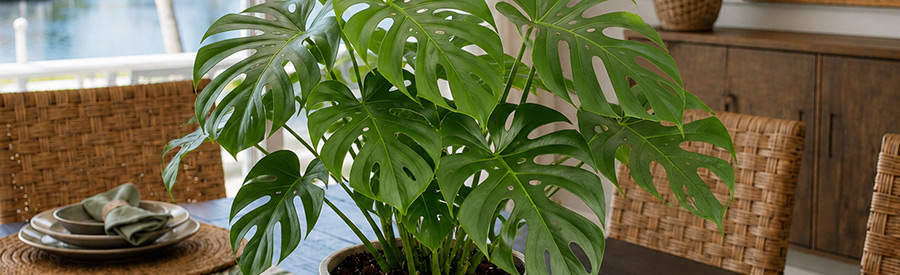
Houseplants do more than brighten a room—they add texture, soften hard surfaces, and create a welcoming atmosphere. While choosing the right plant is important, where you place it has just as much impact on its health and appearance. By matching a plant’s light and humidity needs with the right location, you can enjoy thriving greenery throughout your home.
Living Room
The living room is often one of the brightest spaces in a home, making it an excellent place for larger statement plants. Position floor plants such as fiddle leaf figs, rubber plants, or bird of paradise near windows where they receive bright, indirect light. Smaller plants can be displayed on side tables, bookshelves, or media consoles to add layers of greenery without overwhelming the space.
Kitchen
Kitchens are ideal for compact plants that enjoy bright light and occasional humidity. Windowsills, countertops, and open shelving provide attractive locations for herbs, pothos, peperomia, and philodendrons. Just be sure to keep plants away from hot stovetops or areas where cooking grease may accumulate.
Dining Room
A dining room feels more inviting with a touch of greenery. A medium-sized plant placed in a corner or beside a buffet can create balance, while a simple centerpiece of small potted plants adds natural charm to the table. Choose plants that complement your décor without obstructing conversation or sightlines.
Bedroom
Houseplants can bring a calming, relaxing feel to the bedroom. Snake plants, ZZ plants, and pothos are excellent choices because they tolerate a variety of light conditions and require minimal maintenance. Place them on a dresser, nightstand, or in a bright corner to add color and texture without creating clutter.
Bathroom
If your bathroom has a window, it’s an ideal environment for humidity-loving plants. Ferns, calatheas, orchids, and many tropical species appreciate the added moisture created by showers. Even a small plant on a vanity or shelf can make the room feel more like a spa retreat.
Home Office
Adding plants to your workspace can make the room feel more comfortable and inviting. Position a small plant on your desk or a larger one in a nearby corner where it receives adequate natural light. Greenery helps soften office furniture and creates a more pleasant environment for work or study.
Entryway
Welcome guests with a healthy, attractive plant near your front door. If the area receives sufficient natural light, a tall floor plant or an elegant grouping of smaller plants can create an inviting first impression. For darker entryways, choose varieties that tolerate lower light levels.
Tips for Successful Placement
No matter where you place your plants, a few simple guidelines will help them thrive:
- Match each plant to its preferred light conditions rather than forcing it into a decorative location.
- Keep plants away from heating and air conditioning vents, fireplaces, and drafty doors.
- Rotate containers every few weeks so plants grow evenly toward the light.
- Allow enough room around each plant for air circulation and future growth.
- Use decorative pots and plant stands to vary heights and create visual interest throughout your home.
Bring Nature Into Every Room
Thoughtful plant placement enhances both your home’s appearance and your plants’ long-term health. Whether you’re decorating a sunny living room, brightening a kitchen countertop, or creating a relaxing bedroom retreat, choosing the right location helps your houseplants flourish. With a little planning, every room can benefit from the beauty, texture, and fresh feel that living plants bring indoors.