
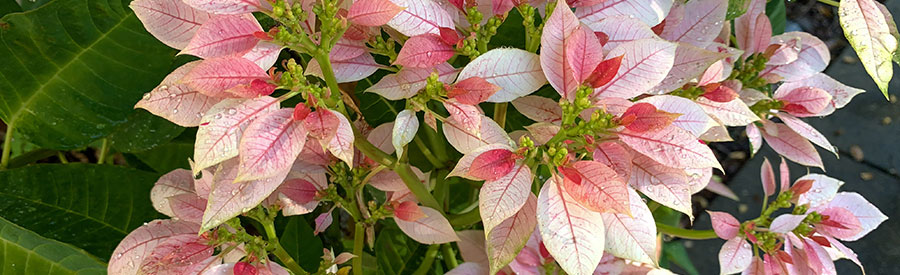
Poinsettias are one of the most beloved plants of the holiday season, bringing vibrant reds, snowy whites, soft pinks and festive color combinations into our homes. But here’s something many Florida gardeners don’t realize: Your poinsettia doesn’t have to be a temporary holiday decoration!
With a little care and Florida’s warm climate, these tropical beauties can continue growing long after the Christmas decorations have been packed away. In fact, poinsettias can become attractive landscape shrubs and may even produce their colorful holiday displays year after year.
Here’s how to make your poinsettia last longer, whether you keep it indoors, on your lanai, or eventually plant it in your garden.
Find the Perfect Spot Indoors
Poinsettias love bright light, but they don’t appreciate sudden temperature changes.
Place your plant near a bright window where it receives plenty of natural light. Avoid positioning it directly beneath air-conditioning vents, near frequently opened exterior doors, or anywhere it might experience chilly drafts.
For best results, maintain indoor temperatures around 65°F at night and 75–80°F during the day.
Florida tip: A bright, enclosed lanai can be an excellent place for poinsettias, provided temperatures remain comfortable and the plants are protected from cold weather.
Don’t Love Your Poinsettia to Death With Water!
One of the most common reasons poinsettias fail prematurely is overwatering.
These plants prefer soil that stays lightly moist but never waterlogged. Before watering, touch the soil surface. If it feels dry, it’s probably time for a drink.
Make sure the container has drainage holes, and never allow the pot to sit in standing water.
Many holiday poinsettias arrive wrapped in decorative foil. While attractive, these wrappers can trap excess water around the roots. Remove the foil when watering or make sure water can drain freely.
Florida tip: If your poinsettia is outdoors on a covered porch or lanai, check the soil regularly. Warm, breezy days can dry out container plants faster than you might expect.
Keep the Holiday Color Going
Those gorgeous red, pink, or white portions of your poinsettia aren’t actually flowers. They’re specialized leaves called bracts. The plant’s true flowers are the tiny yellow structures clustered in the center.
With proper watering, comfortable temperatures, and sufficient light, those colorful bracts can remain attractive for several months, sometimes well into March.
As the bracts begin to fade, don’t assume your plant is dying. It’s simply transitioning out of its holiday display and preparing for another growing season.
Give Your Poinsettia a Second Life Outdoors
Here’s where Florida gardeners have a real advantage!
Poinsettias are tropical perennials, meaning they can live for several years in suitable conditions. In Southwest Florida, they can grow into substantial shrubs when planted in the landscape.
Once the holiday display has faded and the danger of frost has passed, consider moving your poinsettia outdoors.
Choose a location that offers:
- Plenty of sunlight, ideally at least several hours daily.
- Well-drained soil that doesn’t remain soggy.
- Protection from strong winds and occasional cold snaps.
- An area away from artificial nighttime lighting.
Before planting, gradually introduce your poinsettia to stronger outdoor sunlight over a week or two. This helps prevent leaf scorch from a sudden change in growing conditions.
Florida tip: Poinsettias are sensitive to frost and freezing temperatures. Even in Sarasota and surrounding communities, occasional winter cold fronts can damage these tropical plants. Be prepared to protect them when temperatures drop.
Prune for a Fuller, Healthier Plant
Left alone, poinsettias can become tall, woody, and somewhat leggy. Fortunately, pruning encourages new branching and a fuller appearance.
After the holiday display has finished and frost danger has passed, trim your outdoor poinsettia back to approximately 12–18 inches above the ground, depending on its size and condition.
As new shoots develop, additional light pruning can help maintain a compact, bushy shape. Leave several healthy leaves on each shoot to support continued growth.
Important: Stop pruning by early September, preferably no later than September 10. Late pruning can interfere with the development of the colorful holiday display.
Feed Your Poinsettia During the Growing Season
Potted poinsettias generally don’t need fertilizer while they’re displaying their holiday color.
However, once your plant begins actively growing again, proper nutrition can help encourage healthy foliage and stronger stems.
For established outdoor poinsettias in Central and South Florida, fertilizing approximately once a month from March through October can support healthy growth.
Choose a suitable fertilizer with balanced nitrogen and potassium and follow the manufacturer’s directions.
Avoid overfertilizing, which can encourage excessive leafy growth.
Want Your Poinsettia to Turn Red Again Next Christmas?
This is where things get especially interesting!
Poinsettias are known as short-day plants, meaning they develop their colorful bracts in response to longer nights.
In the fall, they require approximately 13–14 hours of uninterrupted darkness each night for several weeks to initiate their holiday display.
That’s why an outdoor poinsettia planted near a streetlight, porch light, landscape spotlight, or brightly illuminated window may struggle to develop its seasonal color.
For potted plants kept indoors, you can encourage recoloring by placing them in complete darkness each evening, beginning around October 1, and returning them to bright light during the day. Continue for approximately eight weeks.
Outdoor poinsettias growing in naturally dark locations can often develop their holiday colors without special treatment, although weather and variety can affect the timing and intensity.
With a little planning, your poinsettia could become a colorful part of next year’s holiday celebration!
A Florida Holiday Favorite Worth Keeping
While many people treat poinsettias as disposable decorations, these beautiful plants have much more to offer.
Florida’s relatively mild winters and long growing season make it possible to enjoy poinsettias as both holiday houseplants and attractive outdoor shrubs. With proper light, watering, pruning, and cold protection, a single plant can provide enjoyment for years.
So when the holidays are over, think twice before tossing that poinsettia. Give it a little extra attention, and you might be surprised by what it becomes!